QUICK ANSWER: How do you choose a product design firm?
The best product design firms help you figure out what to build, validate whether it’s worth building, and design it so engineering can actually ship it. Evaluate firms on their process, their integration with engineering, and their ability to make hard product decisions. A beautiful portfolio tells you a team can render. It also tells you very little about whether they can think through the problem your product needs to solve.
The Portfolio Trap
Most companies start their search for a product design firm the same way: they open a few websites, scroll through portfolios, and make a shortlist based on which work looks the most impressive. It feels like a reasonable approach. Design is visual. The output should speak for itself.
The problem is that portfolios show you the finish line. They show you clean, polished screens that have already been through rounds of iteration, client feedback, and engineering constraints. What they don't show you is how the firm got there. And that process is where most of the value lives.
A firm can ship pixel-perfect interfaces that users struggle to understand. A firm can produce beautiful mockups that engineering can't build without rewriting the architecture. A firm can design an experience that looks incredible in a case study but creates operational chaos when real people use it at scale. The screenshots look the same in all of these scenarios.
So how do you evaluate process if you can't always see it in a portfolio? You ask about it. The best signal comes from how a firm talks about their work, not just what they show. Can they walk you through the decisions behind a design? Can they explain what changed along the way and why? Can they point to moments where research, technical constraints, or user feedback redirected their approach? A firm that speaks fluently about the reasoning behind their work has a process worth trusting. A firm that can only narrate the deliverables probably doesn't.
This is especially true for complex digital products. If you're building something with real users, real data, real transaction logic, and multiple user types (most of us are), you need a design partner that thinks in systems, not just screens. The visual layer is the last mile. Everything underneath it is where the product succeeds or fails.
Understanding the Landscape: Design Firms, Digital Product Studios, and Agencies
The labels companies use to describe themselves vary, and the boundaries between categories are fuzzy. The operating model behind the label matters a lot when you're choosing a partner for product design work.
Pure Design Firms
These teams are typically strong at visual design, branding, and interaction design. They produce high-quality design artifacts: wireframes, prototypes, component libraries, visual specifications. Many have deep expertise in user research and UX strategy.
The handoff is where things get complicated. A pure design firm delivers specs. Your engineering team (or a separate development partner) builds from those specs. This can work well if you have a strong internal engineering team that's experienced at translating design intent into production code. It works less well when the product is complex, when design decisions have significant technical implications, or when the requirements are still evolving. The gap between a polished comp and a shippable product is real, and it's where a lot of design value gets lost.
Digital Product Studios
A digital product studio combines strategy, design, and engineering under one roof. The disciplines work together continuously rather than in sequence. Designers and engineers collaborate throughout the design process, which means feasibility checks happen while the work is taking shape, not after a formal handoff.
This model tends to produce the strongest outcomes for complex digital products because it eliminates the gap between design intent and technical execution. When the person designing the interface and the person building the API are working in the same context, sharing the same goals, and reviewing each other's work in real time, the product gets better faster. Trade-offs surface early. Constraints become design inputs instead of late-stage surprises. Whether the team is in one office or distributed across time zones, what matters is that design and engineering operate as a single product team with shared accountability for the outcome.
Large Agencies
Full-service agencies bring a broad capability set and often have dedicated design practices staffed with talented people. Their strength is typically in brand-level thinking: identity systems, campaign design, and experience concepts that span channels.
Where agencies sometimes struggle is with the granularity of product UX for complex digital systems. Designing a brand experience and designing a data-heavy application with five user roles and thirty edge cases per screen are fundamentally different problems. Both are design. They require different muscles.
The right model depends entirely on what you're building. If the product is relatively straightforward and your internal team can handle engineering independently, a pure design firm might be exactly what you need. If the design needs to be deeply integrated with engineering (and for most complex digital products it does), a firm that separates those disciplines is going to create friction that compounds over the life of the project.
What Good Product Design Firms Actually Do
There's a meaningful difference between firms that produce nice-looking interfaces and firms that consistently ship products people actually want to use. The difference shows up in the process, not the portfolio.
Discovery and Research
A firm that starts designing before understanding the problem is a firm that will redesign later. Strong product design partners invest time upfront in understanding who the users are, what they're trying to accomplish, and where the current experience breaks down. This looks like user interviews, competitive analysis, stakeholder workshops, and technical feasibility assessments. It's the least glamorous phase of a design engagement, and it's the one that determines whether everything else lands.
Systems Thinking
Good product designers don't design screens. They design systems. That means thinking about flows, states, edge cases, error handling, empty states, loading states, and what happens when the user does the one thing nobody anticipated. It means considering the full user journey, including the unglamorous parts that never make it into a case study but absolutely make or break the experience in production.
Ask a prospective design partner how they handle edge cases. If the answer is vague or deferred to engineering, that's a signal. The best design firms treat edge cases as design problems, not cleanup work.
Design-Engineering Collaboration
The strongest product design happens when designers and engineers are working as one team. Feasibility checks happen during design, not after. Technical constraints become inputs to the design process, shaping solutions rather than blocking them after the fact. This doesn't require sharing an office. It requires sharing context: the same product goals, the same backlog, the same working rhythm. Joint reviews, shared channels, engineers weighing in on prototypes, designers reviewing implementation. The collaboration is structural, built into how the team operates every day.
When design and engineering operate as separate workstreams with a formal handoff point, you get what the industry calls the "throw it over the wall" dynamic. The design team produces a vision. The engineering team receives it and immediately identifies twelve things that won't work as specified. The next two weeks are spent negotiating compromises that could have been resolved in a single working session. Multiply this across every feature, and the cost in timeline and quality adds up fast.
Knowing When to Use the Tools and When to Do the Work
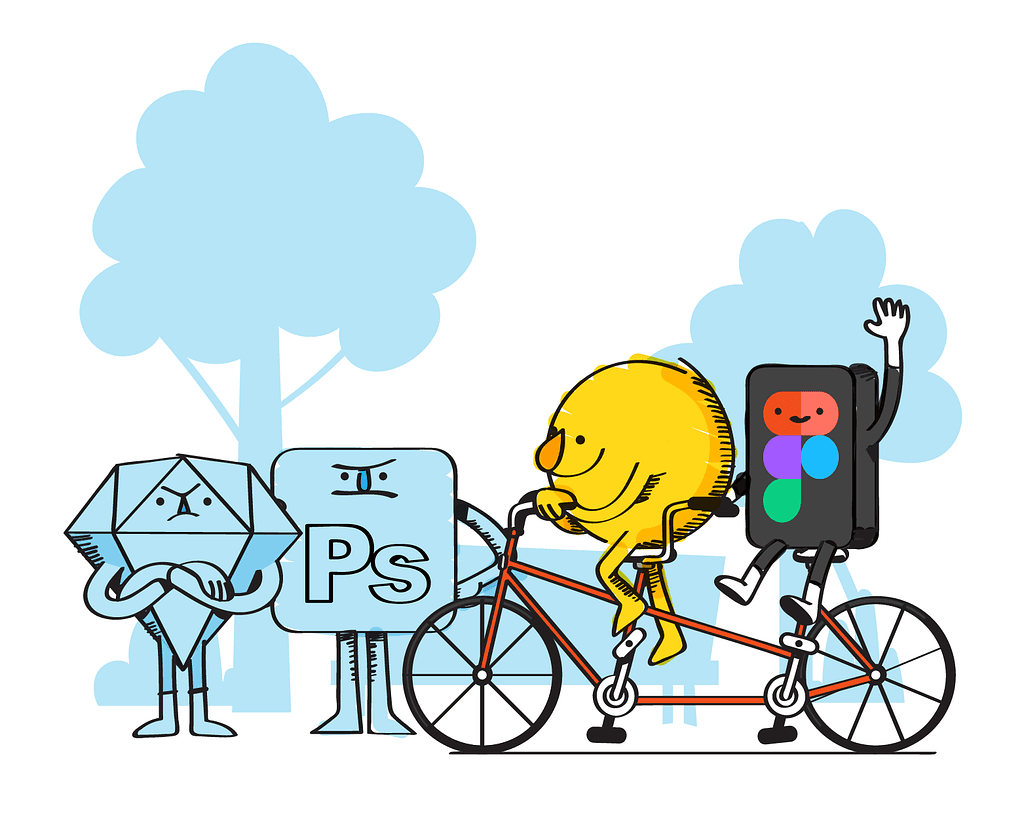
There's a growing class of AI-powered design and prototyping tools that can accelerate parts of the product design process. The best firms use them. They use them to move faster through early concepts, to generate variations, to stretch a client's budget further than it would go with a purely manual approach. That's a real advantage.
The distinction worth paying attention to is between firms that use these tools because they understand what good output looks like and firms that use them because the tools are fast. Speed is valuable. Speed without judgment is expensive. AI-generated layouts can look polished at a glance and fall apart under real usage: inconsistent interaction patterns, accessibility gaps, flows that don't account for error states, visual systems that aren't actually systematic. These are the kinds of problems that surface after launch, and they cost significantly more to fix than they saved in production.
A firm with deep hands-on design experience can spot those failure points before they ship. They've built enough products the hard way to know where the shortcuts hold up and where they don't. That lived experience is what lets them use new tools effectively. It's what separates a team that accelerates with confidence from a team that just accelerates.
When you're evaluating a design partner, ask how they think about AI tools in their workflow. You're listening for specificity. A firm that can explain exactly which parts of their process benefit from automation, and which parts still require human craft, has thought seriously about the question. A firm that positions AI tooling as a blanket capability probably hasn't.
Iteration Discipline
The cost of changing a Figma file is a fraction of the cost of rewriting a feature post-launch. Firms that prototype, test, and refine before committing to code save their clients enormous amounts of time and money. Firms that skip this step ship faster initially and spend longer fixing the result.
Ask how a firm handles designs that don't test well. The answer reveals a lot. Firms that iterate treat testing as a tool. Firms that defend treat testing as a threat.
FROM THE PORTFOLIO: AXONI
Axoni builds blockchain infrastructure for major financial institutions, powering real-time data replication across complex trading systems through their HYDRA platform. When they engaged HFC for strategic design support, they were facing a convergence of problems: their sole designer was departing with almost no transition period, the existing design files were fragmented across two distinct products (Veris for data reconciliation and Stellar for trade confirmation), and an outdated, inconsistently applied component library was creating real bottlenecks for engineering.
HFC’s design team embedded immediately, learning the products on the fly while shipping features to keep development on track. The deeper work happened in parallel: a full overhaul of the design file organization and the creation of a scalable design language system that could support both products, both light and dark modes, and the distinct branding requirements of different financial institution clients. The system needed enough flexibility to accommodate current client-partner color schemes while laying the groundwork for an eventual unified visual identity.
Today, both Veris and Stellar share a unified design library that accelerated iteration speed, eliminated the inconsistencies that had been slowing engineering down, and gave Axoni’s product teams the structured foundation they needed to scale design work without a single point of failure. It’s a clear example of what product design looks like when systems thinking and engineering integration are treated as first-class priorities.
Questions to Ask During Evaluation
Portfolios and pitch decks are marketing tools. Conversations are where you learn what a design firm is actually like to work with. These questions are designed to cut past the presentation layer and reveal how a firm operates when the work gets real.
"Walk me through a project where the direction changed significantly during the engagement."
This tests whether a firm adapts when new information surfaces or just executes the original plan. Every project encounters something unexpected: user behavior that doesn't match assumptions, a technical constraint that reshapes what's feasible, a stakeholder priority that shifts mid-stream. You're listening for how they navigated it. A firm that can describe that pivot with specificity has a process that actually responds to reality.
"How do your designers and engineers work together day to day?"
This reveals the real operating model behind the pitch. You're listening for specifics: shared standups, joint working sessions, real-time feedback loops, designers reviewing code, engineers reviewing prototypes. Vague answers like "we collaborate closely" are not real answers.
"Show me something you designed that was technically difficult to implement. What tradeoffs did you make?"
This separates concept designers from product designers. Anyone can design an ideal experience unconstrained by reality. The skill is in making the right compromises when reality pushes back. A firm that can walk you through specific technical tradeoffs with specificity has been in the trenches. A firm that can't has been in the studio.
"What happens when a design doesn't test well?"
You want to hear about iteration, not defense. The best firms treat a failed test as useful information that moves the product forward. Firms that get defensive about user feedback will get defensive about your feedback too.
"How do you use AI tools in your design process, and where do you draw the line?"
This is becoming a critical question. You want to hear nuance. The right answer isn't "we use AI for everything" and it isn't "we don't touch it." You're looking for a team that can articulate which parts of their workflow benefit from new tools and which parts demand the kind of judgment and craft that only comes from experience. A firm that treats AI as a superpower without caveats hasn't hit the failure cases yet.
"What does your handoff process look like?"
This question is especially important if the design firm won't be doing the engineering work. You need to understand how design specifications get translated into buildable artifacts. Are they producing annotated prototypes with interaction specifications? Component documentation with responsive behavior defined? Or are they handing over a Figma file and wishing your engineers good luck?
For a broader evaluation framework that covers partner selection beyond design specifically, including how to assess communication, transparency, post-launch support, and pricing, see our companion piece on how to choose a software development partner.
Red Flags
A few signals that a design firm may not be the right fit for serious product work.
They lead with awards and visual polish but can't explain the reasoning behind their design decisions. Design awards recognize aesthetics. Your product needs judgment.
No discovery phase. They're ready to start designing from a brief alone. A firm that doesn't need to understand the problem before proposing a solution is a firm that's designing for the pitch, not for the product.
Design and engineering exist as separate workstreams with a formal handoff between them. This structure guarantees friction. It doesn't matter how talented the designers are if the handoff introduces a translation layer that dilutes their intent.
They position AI tooling as a replacement for design thinking rather than an accelerant. If a firm's pitch centers on speed and cost savings from automation without a clear explanation of where human judgment stays in the loop, the work will reflect that gap eventually.
They've never worked on a product that shipped to real users at scale. Marketing sites and brand design require different skills than product design for complex, data-driven systems with multiple user types. A firm that does the first thing very well may have no idea how to do the second.
They can't describe a single design decision they reversed based on new information. This suggests a process that doesn't actually incorporate feedback, or a team that equates changing course with failure. Both are problems.
FROM THE PORTFOLIO: WEWORK NOW
When WeWork set out to create a new kind of space that blended retail, hospitality, and on-demand coworking under one roof in Manhattan’s Flatiron neighborhood, the product design challenge went well beyond building a booking platform. The concept, originally branded MadeByWe, would be part café, part design goods shop, and part flexible workspace. Walk-in guests, freelancers, DTC brand shoppers, and WeWork members would all use the same space for different purposes. The digital experience had to serve all of them without feeling disjointed.
HFC provided technology leadership alongside front- and back-end engineering, designing and building the responsive web app that let guests browse products, reserve workspace, and navigate the hybrid environment. Architecture decisions were made with scalability in mind, anticipating that the concept would expand to additional locations. The e-commerce platform also showcased direct-to-consumer brands that were WeWork members, creating an additional retail channel that reinforced the ecosystem.
WeWork Now launched in January 2019 to positive reception. The project illustrates what good product design looks like when there is no established pattern to copy. No existing template existed for this kind of experience. The design had to account for physical-digital integration, multiple user types with different intent, and a business model that was itself an experiment. That’s the kind of problem that separates product design firms from firms that produce screens.
Making the Call
If you've already worked through the build vs. buy decision and you know you need a design partner, this is where a significant amount of product quality gets won or lost. The firms that consistently produce strong outcomes treat design as a product discipline: research-informed, engineering-integrated, and accountable to real users.
The evaluation process takes time. It requires conversations that go deeper than a portfolio walkthrough. It requires reference calls where you ask specifically about what went wrong and how the team handled it. It requires enough honesty on both sides to determine whether the fit is right before the contract is signed.
That investment pays for itself. A great design partner shapes how your product feels to the people who use it. A poor one creates beautiful artifacts that don't survive contact with engineering, with users, or with reality.
See what integrated product design and engineering looks like in practice. Explore our portfolio or start a conversation about your project.